
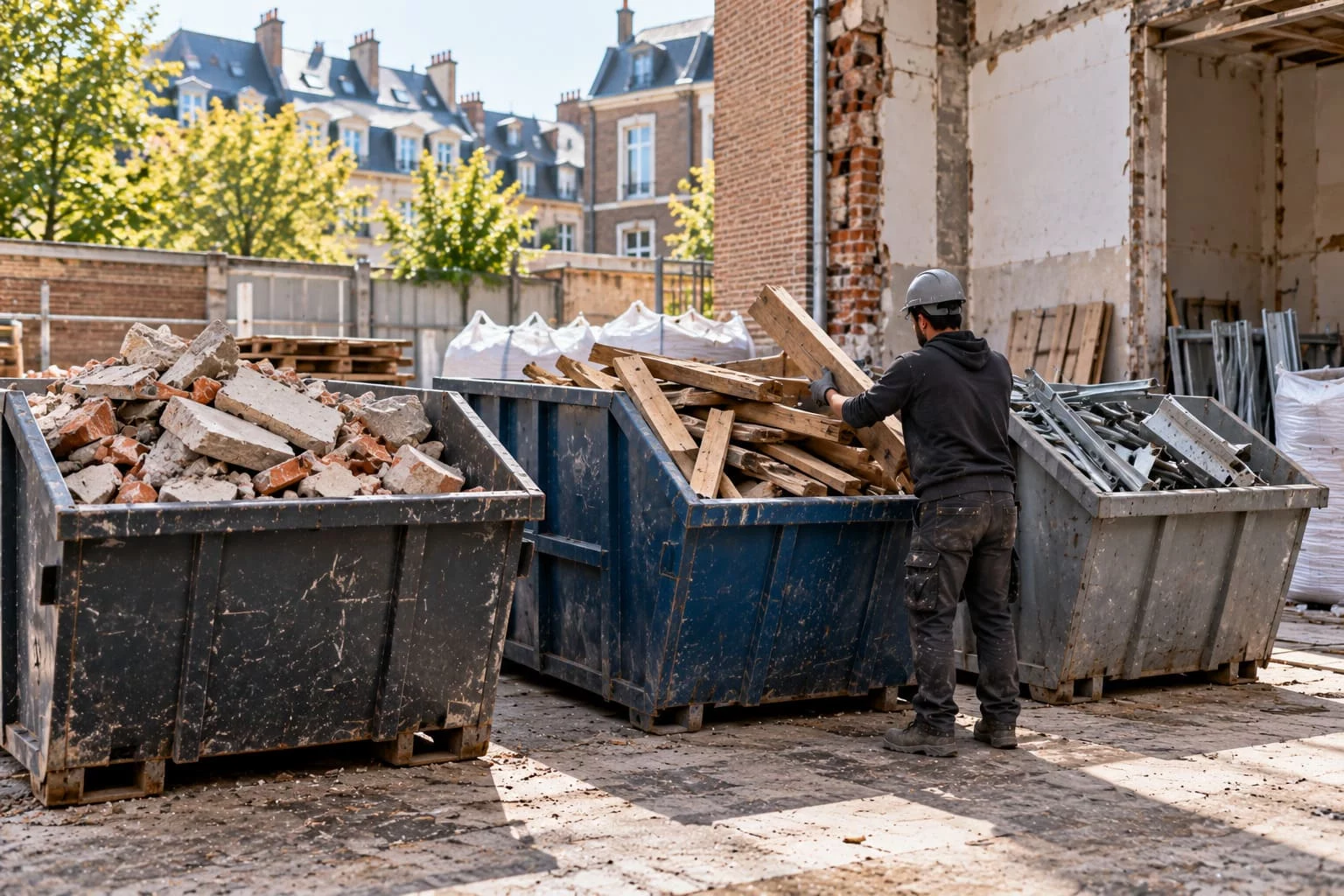
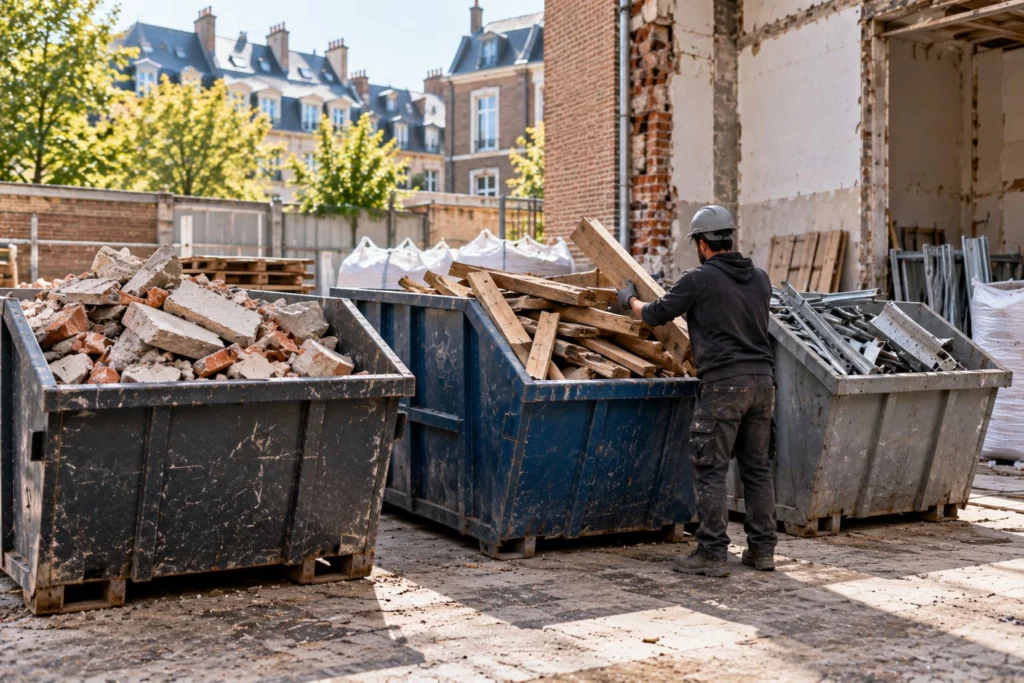
A demolition site produces three main families of waste: inert, non-hazardous and hazardous. Separating them from the start makes recycling easier and keeps problem waste out of the wrong place.
1. Inert waste
Concrete, bricks, blocks, tiles, roof tiles, soil, glass. The “classic” rubble: heavy but largely recyclable into aggregates.
2. Non-hazardous waste
Wood, plastics, cardboard, skirting, metals, plaster, carpet, lino, PVC pipes. Many have their own recycling route, notably wood, metal and plaster.
3. Hazardous waste
Asbestos, lead paint, solvents, sealant cartridges, batteries. These never go in an ordinary skip: they follow a specific route, and asbestos is removed by a licensed company.
Where can it go in Brussels?
Private individuals can take certain waste to Bruxelles-Propreté / Net Brussel Recyparks, within the quantities and conditions in force. For a building site, a skip and a contractor who sorts are simpler: at ProDemolition, waste is sorted and taken to partner recycling centres.
See: site cleaning and rubble removal.
A project in Brussels or elsewhere in Belgium? The site visit and quote are free: call 02 315 50 33 or describe your project in one minute.
Frequently asked questions
Can plaster go with the rubble?
Better to keep it separate: it often has its own recycling route.
Where does asbestos go?
Never in an ordinary skip: its removal and disposal are reserved for a licensed company.
Further reading
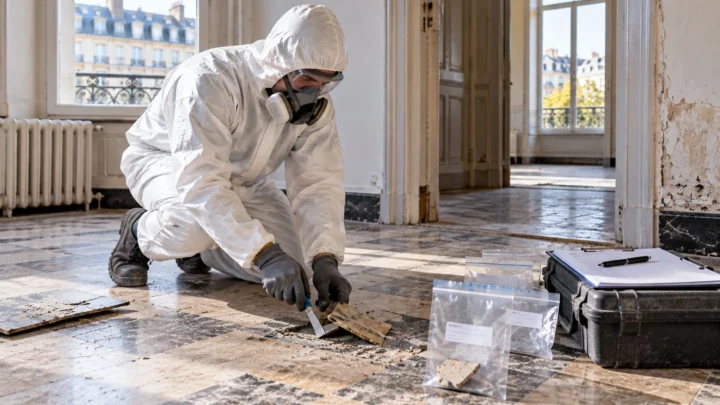
Asbestos before works in Belgium: when do you need a survey?
Older building, demolition, renovation: how to spot the risk and who to contact.
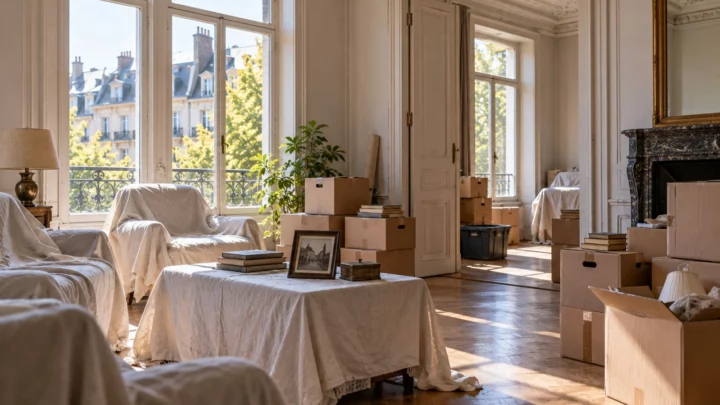
Clearing a home after a bereavement: how to organise it
A difficult time: steps to sort, keep what matters and entrust the rest with respect.
Strip-out before renovation: why removing everything can save you time
Starting from bare walls avoids unpleasant surprises and makes every trade’s job easier.