
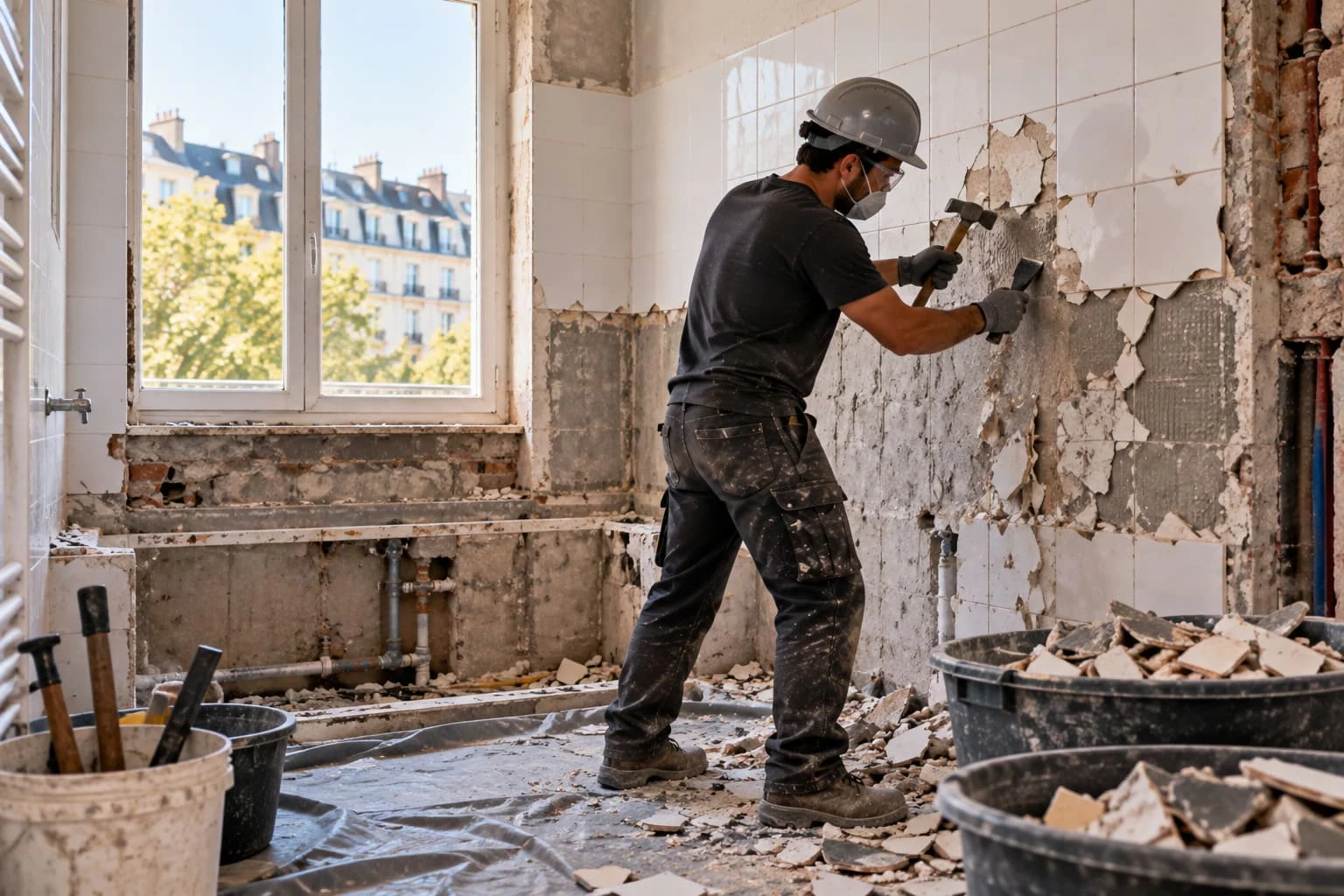
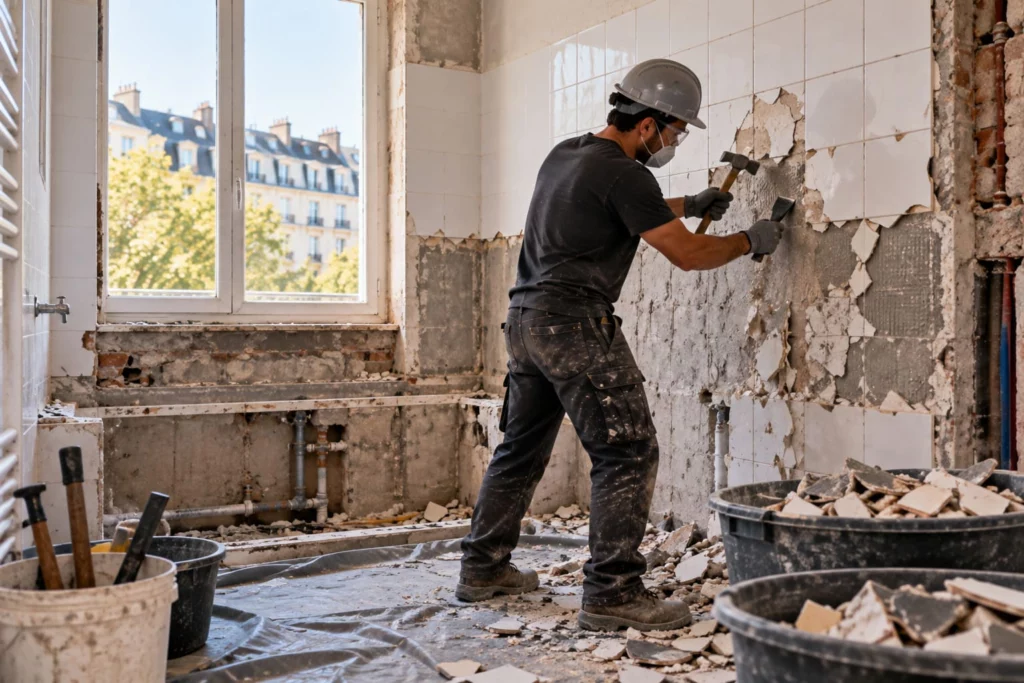
Removing a bathroom follows a set order: make water and electrics safe, protect, remove sanitary ware, strip wall and floor tiles, then remove the waste and clean. Getting the order wrong risks a leak, damage to neighbouring rooms or doing the job twice.
Step 1 — Make safe
Have your plumber shut off the water and cap supplies and drains. Have your electrician isolate and make safe the room’s circuits. This is the number one source of damage on this kind of job.
Step 2 — Protect
- Protect the hallway floor and the route to the exit.
- Close the door and seal the room to limit dust.
- In a block of flats, protect the lift and stairwell.
Step 3 — Remove sanitary ware and units
Bath, shower tray, basin, toilet, units and mirrors come out first, freeing access to the walls and floor.
Step 4 — Wall tiles, floor tiles and screed
Wall tiles are often removed with a hammer and bolster chisel; floor tiles and screed with an electric chipping hammer. Does the screed have to go? Not always: if it is sound and at the right level, it can stay. That is assessed on site.
Step 5 — Remove waste and clean
Tiles and screed are heavy. Plan the right containers (bags, skip) and regular removal so the site does not fill up. Use our rubble calculator to estimate it.
The most common mistakes
- Starting without turning off the water.
- Underestimating the weight of the rubble.
- Damaging a concealed pipe while removing a partition.
- In an older building, forgetting that some adhesives or coverings may contain asbestos.
More: bathroom demolition.
A project in Brussels or elsewhere in Belgium? The site visit and quote are free: call 02 315 50 33 or describe your project in one minute.
Frequently asked questions
Does the screed always have to go?
No. If it is sound and at the right level it can be kept.
Who turns off the water and electrics?
Your plumber and electrician, before demolition.
Is bathroom rubble heavy?
Yes, tiles and screed are dense: plan removal accordingly.
Further reading
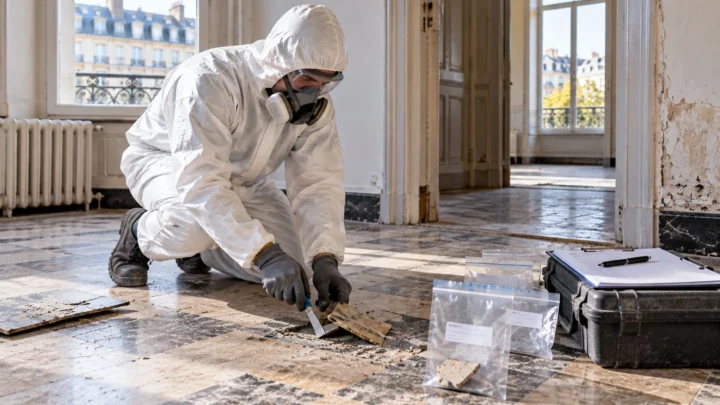
Asbestos before works in Belgium: when do you need a survey?
Older building, demolition, renovation: how to spot the risk and who to contact.
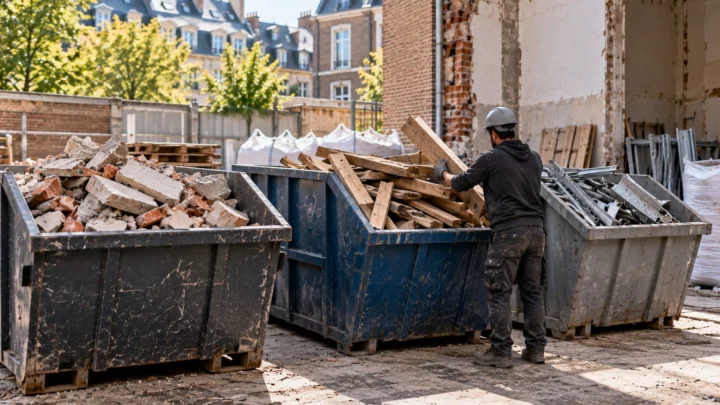
Sorting construction waste: inert, non-hazardous, hazardous
Good sorting costs less and protects the environment. The three waste families and where they go.
Clearing a home after a bereavement: how to organise it
A difficult time: steps to sort, keep what matters and entrust the rest with respect.